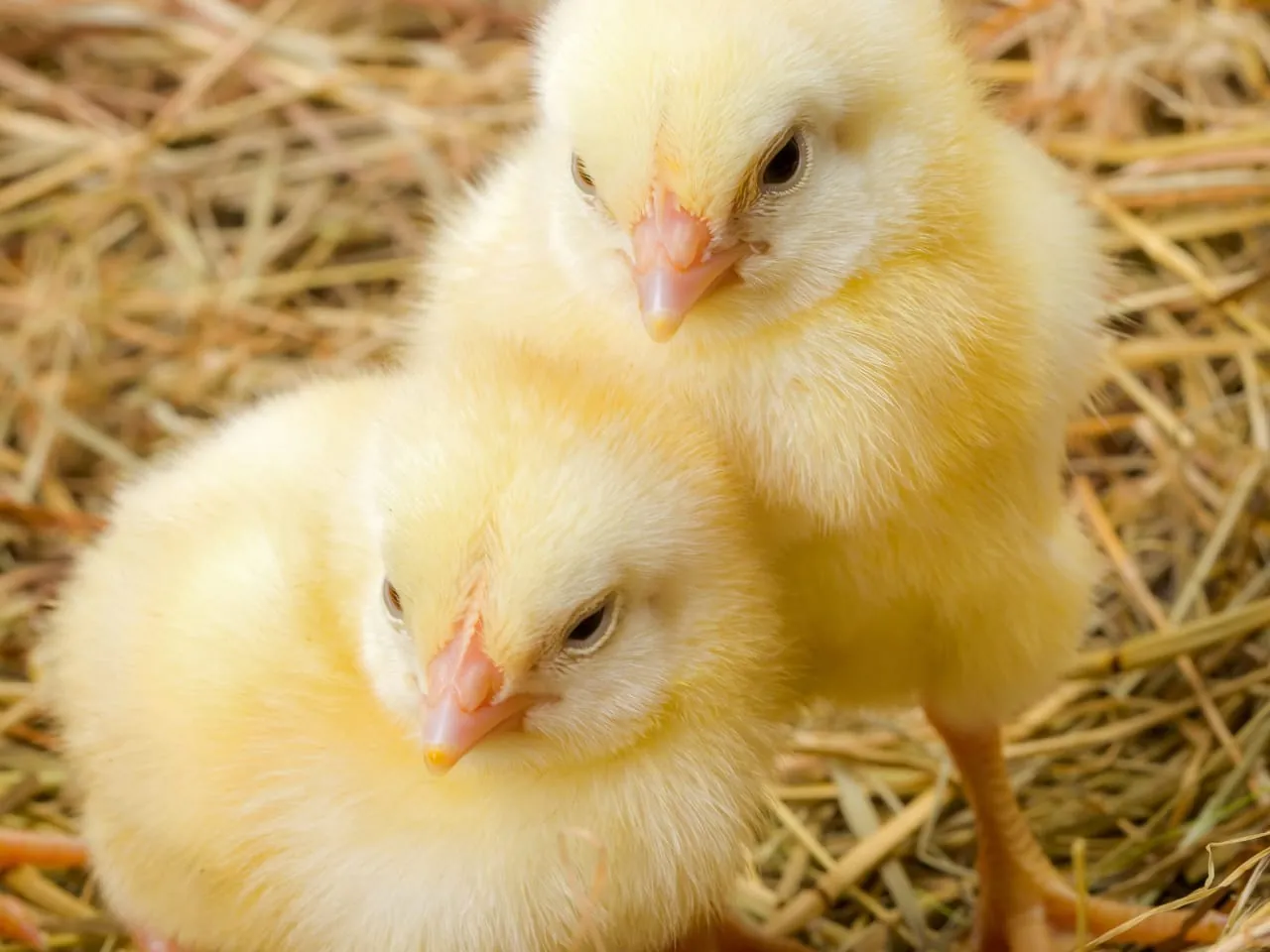
We hatch our own birds in Wakiso rather than buying in and reselling, so we can tell you what each batch was given and when it came off. Pick the breed that matches your housing and how long you can wait for a return.
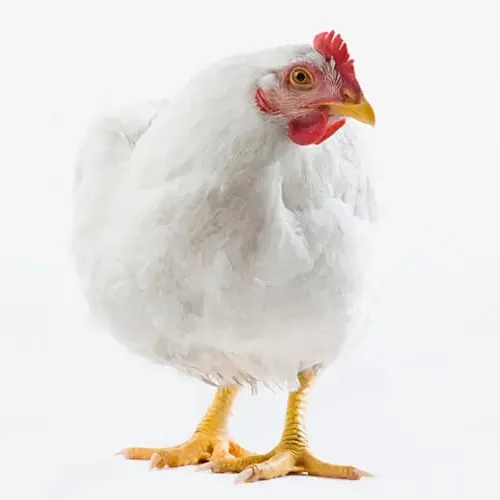
Broilers put on weight quickly and are bred for meat rather than eggs. They suit farmers who want a defined production cycle and a predictable point of sale, and they reward steady feeding and warm, dry brooding.
Commercial meat production
Short production cycles
Intensive housing
What they grow intoA broiler grown to market weight.
Eggs
Layers
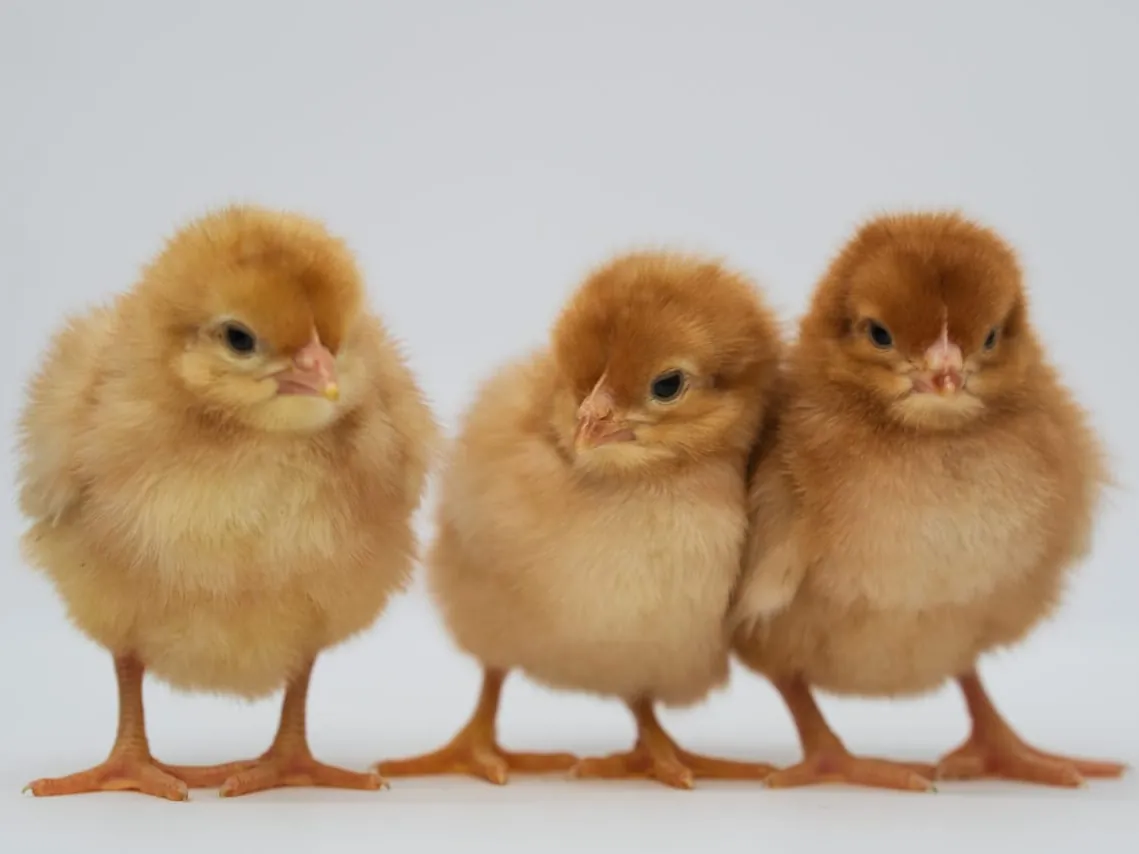
Layer chicks are raised for eggs rather than meat. They take longer to reach production than broilers take to reach market, but they earn over a long laying period, which makes them the steadier income for a farmer who can wait.
Steady egg income
Household and retail supply
Longer-term investment
Dual purpose
Rainbow Rooster
Rainbow Rooster is a coloured dual-purpose bird that gives both meat and eggs. It tolerates free-range and semi-intensive conditions better than a pure commercial broiler, which makes it a common choice where housing is simple and birds scavenge part of their feed.
Free-range and semi-intensive
Both meat and eggs
Simpler housing
Dual purpose
Kuroiler
Kuroiler is an improved dual-purpose breed developed for backyard and smallholder systems. It grows faster and lays more than most indigenous birds while keeping much of their hardiness, so it fits households that keep birds around the compound rather than in a dedicated house.
Backyard and smallholder
Scavenge-fed systems
Hardiness with better yield
Hardy
Local & improved
Local and improved local birds are the hardiest option we supply. They handle local conditions and simpler management with less intervention, and they hold their value in markets that prefer indigenous birds.
Low-input systems
Local market preference
Hardiness first
The first two weeks decide the batch
Most losses happen before the birds are a fortnight old, and almost all of them come down to warmth, water and dry litter. Ask us if anything looks wrong; we would rather answer early.
Have the brooder warm before they arrive
Heat the space and the litter hours ahead, not as the birds walk in. A chick that gets cold in its first hours rarely catches up.
Read the birds, not only the thermometer
Chicks piled under the lamp are cold. Chicks pressed against the walls are too hot. Chicks spread evenly, moving and feeding, are right.
Water first, then feed
Give clean water immediately and let them drink before they eat. Check that every bird has found the drinker within the first few hours.
Keep the litter dry
Wet litter is where most early disease starts. Turn it, top it up, and fix the leaking drinker rather than working around it.
What happens when you order
Chicks are booked against a hatch, not held on a shelf. Knowing that up front is the difference between planning your brooder and waiting on a call.
1
Tell us breed and quantity
Message the orders line on WhatsApp or call. Say which breed you want, how many birds, and roughly when you need them.
2
We confirm your hatch date
We hatch weekly. Book about 14 days ahead and we will confirm the hatch your birds come off and reserve them against your name.
3
We deliver, or you collect
We deliver across Uganda. Tell us where you are and we will agree how the birds travel, or collect from Wakiso on the day if that suits you better.
4
They travel in vented boxes
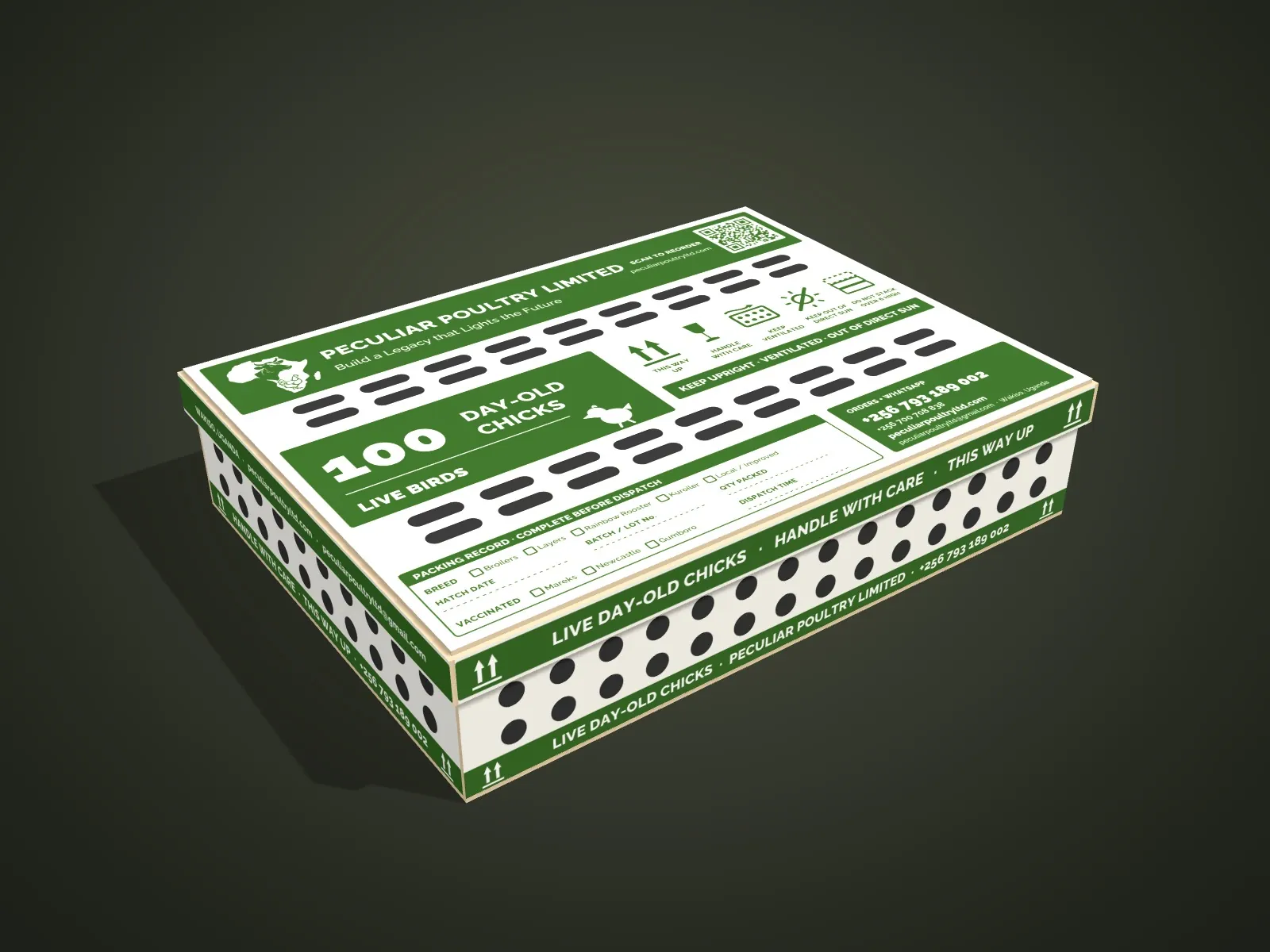
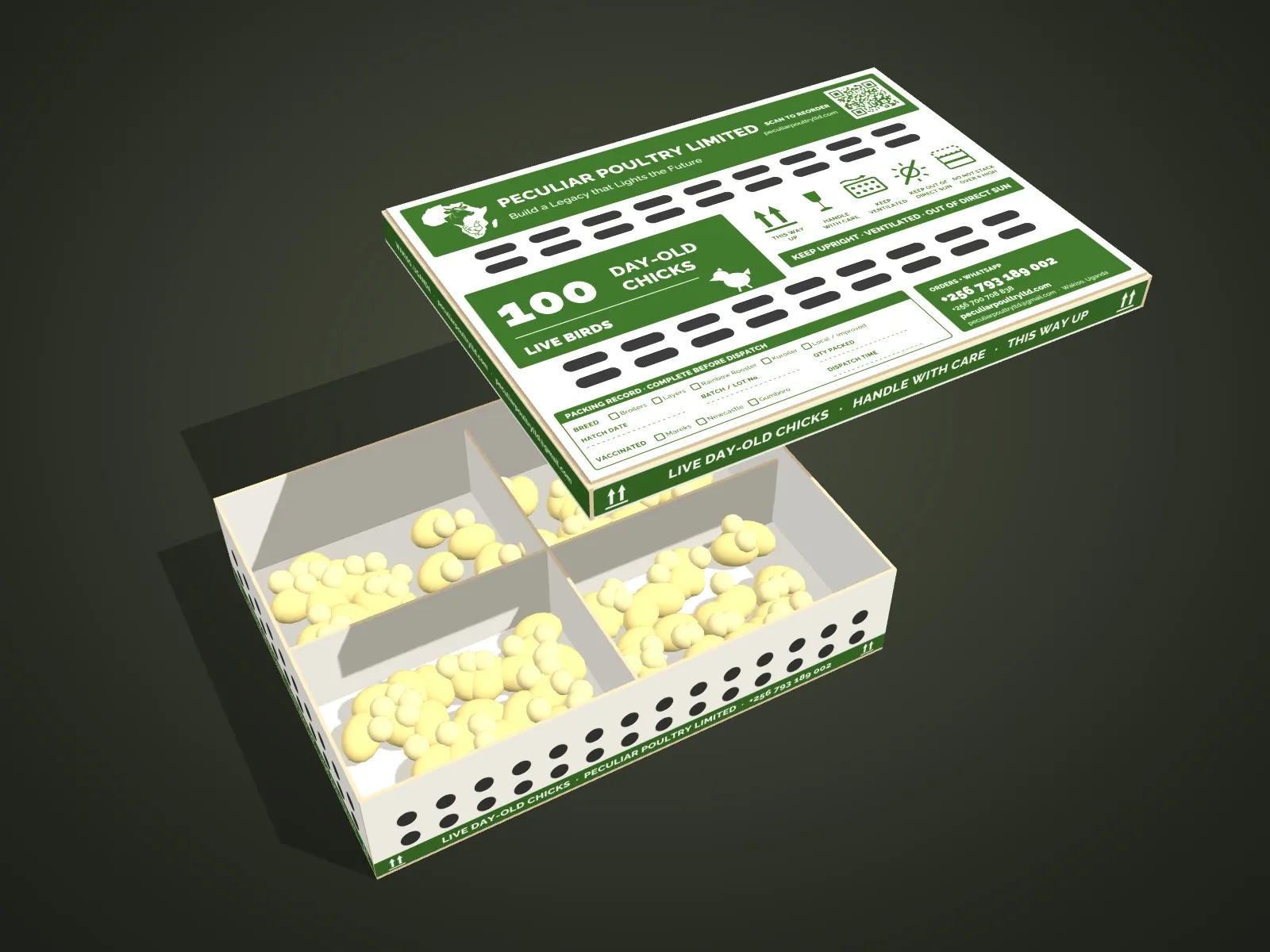
Birds leave in ventilated 100-chick boxes divided into four pens of 25, so they cannot pile into a corner when the vehicle brakes. The batch details are written on the box.
The box your chicks travel in: ventilated on every side, with the breed, hatch date and vaccinations written on the lid.
Inside, a divider makes four pens of 25, so the birds cannot pile into one corner when the vehicle brakes.
Tell us the breed and the number
That is all we need to start. We will come back with the hatch date your birds can be ready on.